
Why most law firm marketing attracts enquiries, not cases
Most law firms do not need more leads. They need better-fit cases that are filtered before the first serious conversation.
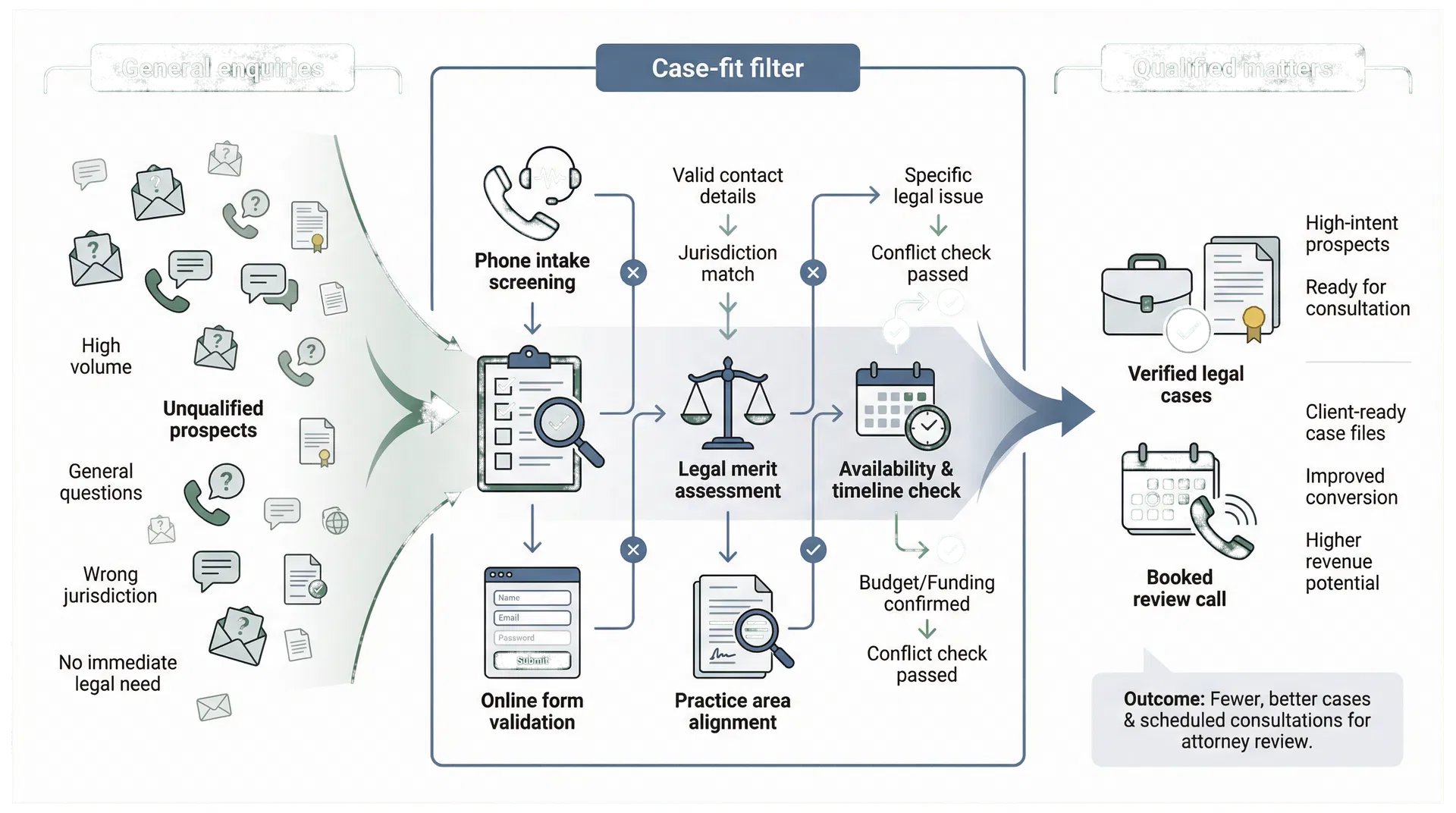
Most law firms do not have a lead problem. They have a case-fit problem. The phone rings, the WhatsApp messages arrive, the form fills come in, and the team stays busy. But busy is not the same as profitable. If the wrong people keep entering the funnel, the firm burns partner time, intake time, and emotional energy on matters that were never going to convert.
The real issue is usually simple. The market sees the firm as available, but it does not understand who the firm is best for, what kind of matter it should bring, and what happens next. When that message is weak, the business attracts noise. The intake team then becomes a filter for confusion instead of a bridge to revenue.
The better strategy is to make the first interaction do more of the sorting. Instead of saying, “Contact us today,” the firm should say something closer to, “Book a case-fit review for employment disputes above a certain value,” or, “Request a fast claim assessment for business owners dealing with unpaid invoices.” That one change makes the offer narrower, but it also makes it stronger. Specificity increases trust because it signals expertise.
A high-performing lead-generation article for a law firm should do three jobs. First, it should call out the expensive problem. Second, it should explain why most people wait too long or choose the wrong action. Third, it should invite the prospect into a small, low-friction next step. That means the article is not there to show how smart the firm is. It is there to help the reader say, “These people understand my problem, and they probably have a path for it.”
A useful article angle is this: “7 signs your legal issue is serious enough to act on this week.” That headline works because it filters. People with minor curiosity will skim and leave. People with real pain will keep reading. Inside the article, the firm can explain urgency markers, common mistakes, evidence the reader should gather, and what happens if the issue drags on. The article should finish with a simple invitation to book a case-fit review, submit basic matter details, or request a document checklist.
The lead-generation win comes from reducing wasted effort on both sides. The reader gets clarity faster. The firm gets better-fit matters. The call to action becomes stronger because the article has already pre-sold the next step.
Book a 15-minute case-fit review and find out whether your matter is worth pursuing now.
Keep reading
Related posts in Lead generation
Move readers to the next useful idea by surfacing articles that share the same topic lane or supporting tags.
Same category: Lead generation
Same category: Lead generation